Matariki and Peace
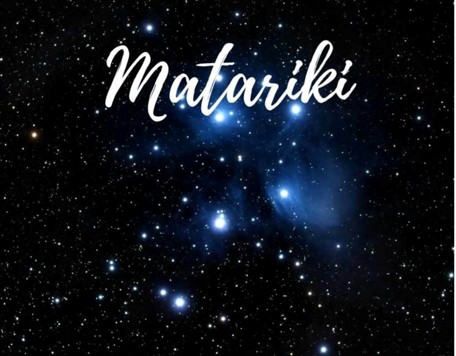
Did you know that the concept of peace is intrinsic to Matariki?
For Māori and many other New Zealanders, the appearance of Matariki, the Pleiades star cluster, is a time to remember those we love, including those who have passed on. It is also a time of thankfulness, joy, family/whānau and peace. Since 2022, Matariki has become a public holiday—the first that specifically celebrates an important event in the Māori maramataka (calendar). There are now many beautiful children’s books about Matariki and the eight other stars that make up the Matariki cluster.
A visual treat is the work of sand artist Marcus Winter. This short YouTube video,
The Stars of Matariki – Ngā Whetu o Matariki, tells the story of each star.
Watch it here:
The Stars of Matariki – Ngā Whetu o Matariki
For adults, Te Ara, New Zealand’s online encyclopedia, provides a detailed history and description of Matariki and its significance. Read more here:
Matariki – Māori New Year
The Matariki holiday provides us with a moment to pause, remember past loved ones, be grateful that we live in a peaceful part of the world, and reach out to family, friends and beyond.
By: Janet Pereira
Once a Peer Mediator, Always a Peacemaker: Stories from Our Cool Schools’ Coordinators
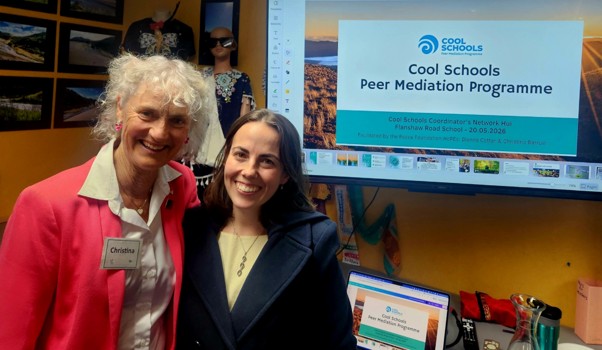
Jasmine Massey
Kia ora, ko Jasmine ahau. I was a Cool Schools Peer Mediator at Whau Valley School in Year 6, 20 years ago. I recall wanting to give service at school and help others, and I enjoyed spending lunchtimes supporting students as a peer mediator. Now, as the Cool Schools Coordinator at my kura, I am excited to be introducing the programme. I see huge value in supporting ākonga to better understand themselves and guiding them to resolve conflict in a managed way through peer mediation.
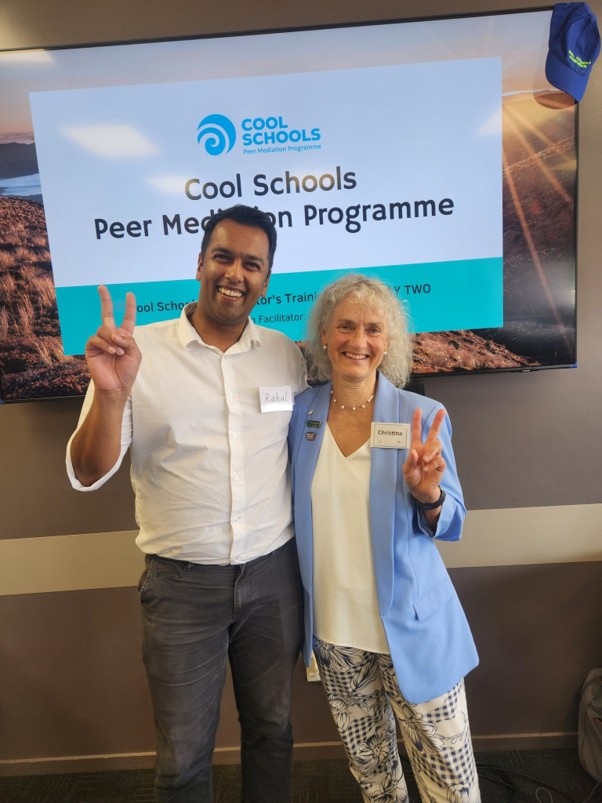
Rahul Rodricks
The Peace Foundation has a vision to encourage people to develop peaceful relationships by teaching communication, co-operation, respect and conflict resolution skills. From almost 20 years ago, when I became a Peer Mediator, to now, as I implement the programme in my school, it is easy to see the positive impact these life skills have. With the media becoming more divisive and the world more fractured and exclusionary, it is more important than ever to teach students empowering conversations that facilitate respect, understanding and safety for all.
Ngā mihi nui,
Rahul Rodricks
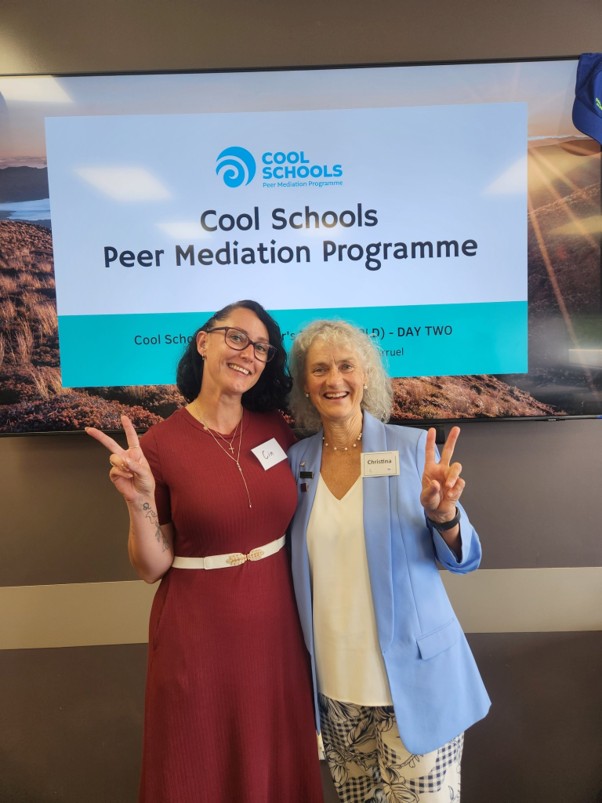
Cinnamon Davies
As a student back in 2003, I trained in the Cool Schools Peer Mediation Programme. I still remember putting on my mediator vest and heading out to the playground, learning for the first time that I could help my peers work through their problems simply by listening. At the time, I did not realise those lessons were becoming a permanent part of who I am. Those early skills in empathy and communication stayed with me long after I left primary school, shaping how I handle challenges in adult life.
Coming back to this mahi now as a Coordinator is a true full-circle moment. It is special to be on the other side of the process, watching today’s tamariki find their voices just as I did more than twenty years ago. To me, this is what sustainable impact really looks like. It is not just a programme for a school term, but a toolkit that stays with you for life. I am living proof that the seeds planted through The Peace Foundation continue to grow, and I am proud to help the next generation find their own path towards peace.
Introducing The Peace Foundation Interns and Mentee: Journeys from Germany and Cambodia to Aotearoa New Zealand
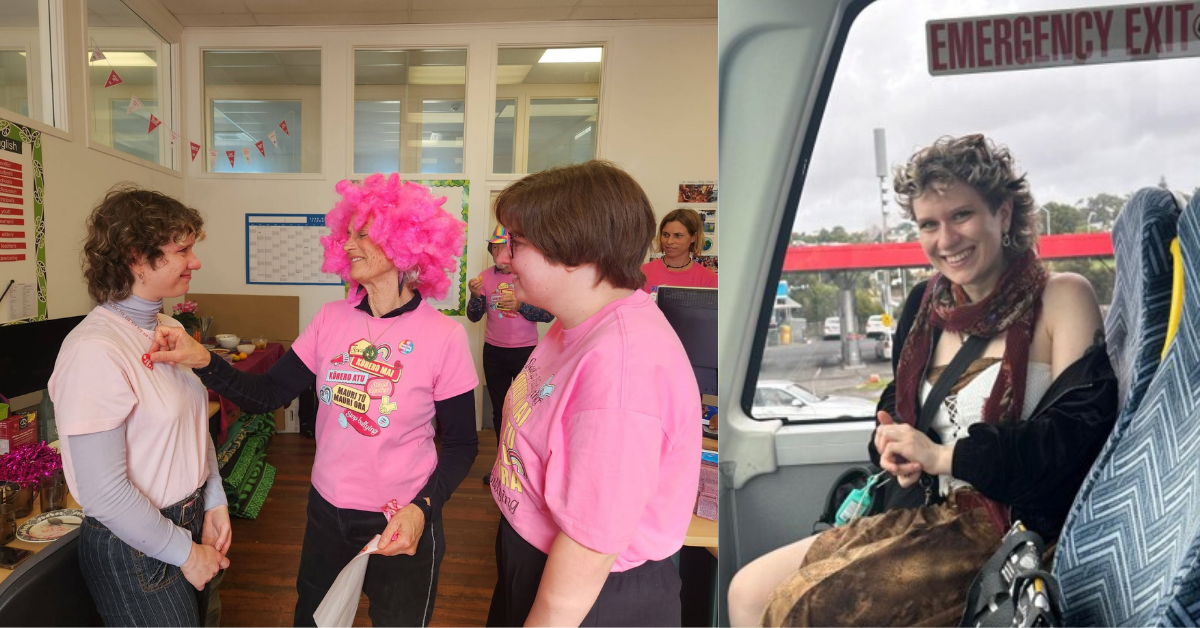
Anna-Maria
Kia ora, ko Anny tōku ingoa, which is short for Anna-Maria. I am an intern from Germany, where I am studying towards a bachelor’s degree in Social Anthropology and English Literature. One of my many passions is the art of communication. Imagine how many problems in this world could be solved if more people had better communication skills.
The projects I pursued during my internship were mainly focused on finding sponsors and supporters for this year’s Youth Peace Symposium. It was important to me that the businesses and organisations I wrote to align well with our theme: Peace & Sustainability! Other tasks included working with Sarah on her brilliant social media plan and supporting Dianna and Christina at the training.
When you are reading this, my wonderful internship at the Peace Foundation will have come to an end. I have only been here for three months, but from day one, there has never been a day in which I did not feel like a valued part of the Peace Foundation whānau. That I feel is truly special!
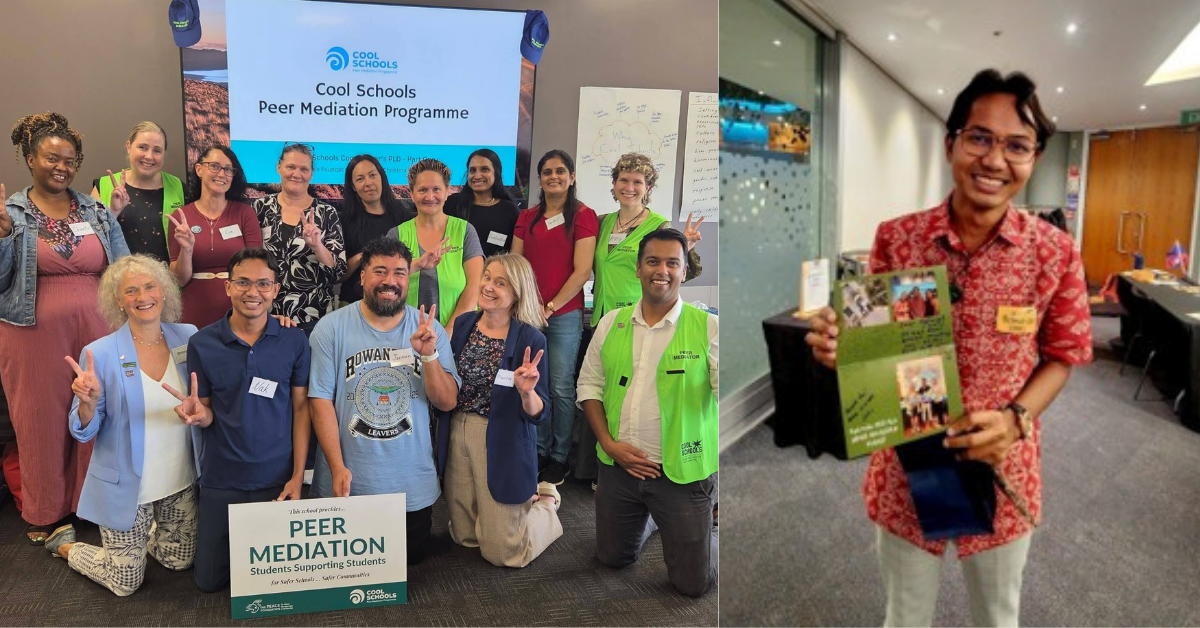
Ratanak NA (Nak)
Kia ora! My name is Ratanak NA (NAK) from Battambang, Cambodia. From March to May, I joined the Peace Foundation through the support of the Cambodia-Laos Young Leaders Programme.
During this time, I learned a lot about peacebuilding programmes and community activities. I also had the opportunity to visit schools, meet peace practitioners, and connect with organisations working on peace education with youth and local communities through the support of the Peace Foundation team.
One of the most meaningful experiences was joining the Peer Mediation Training. Through this training, I learned how to become a mediator who can help solve problems peacefully. I also learned how to support and train youth leaders and teachers to become mediators in their schools and communities.
The mentorship from the Peace Foundation was very valuable for me. It helped me understand more about how peacebuilding works in New Zealand, and how I apply these lessons in my local community in Cambodia. The Peer Support Mediation Training especially inspired me because I can bring this knowledge back to strengthen my project, “Young Peace Leaders for Sustainable Peacebuilding in Battambang Community.”
Even though my mentorship has come to an end, I truly hope we will continue to stay connected, support one another, and work together to promote sustainable peace in our communities and beyond.
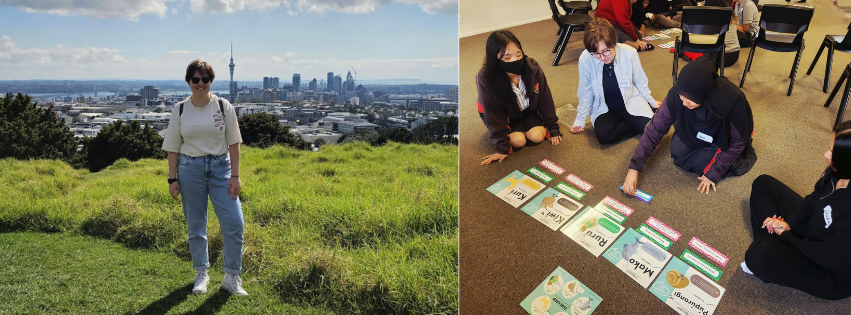
Sarah Helbig
Kia ora, my name is Sarah Helbig, and I am very excited to have joined the Peace Foundation whānau as an intern at the beginning of April. I am currently studying International Social Work at the Protestant University of Applied Sciences Ludwigsburg, in Germany. In my past and especially during my studies, I developed a strong interest and passion in social issues such as global peace, building bridges between people, community work, social responsibility and helping to create positive change in this world. In my internship here I have deepened my understanding of those topics, as well as how an NGO works.
In a world where conflicts are increasing, I believe it is extremely important to teach skills at an early stage and to equip people with tools that enable them to resolve conflicts peacefully and foster respectful and constructive coexistence. I see great social value in the work of the Peace Foundation. This was the reason and motivation for choosing this organisation.
As an intern, I am involved in different kinds of tasks, from social media to sponsorship, and from library projects to contributing to the daily office work.
I have had the privilege of gaining new insights, perspectives and experience. I have learned that there are many ways of peacebuilding and what each of them can look like.
I am looking forward to the next three months at the Peace Foundation. I hope to learn more about peacebuilding in New Zealand and around the world and be inspired by working with such a motivated and amazing team. I also look forward to contributing my own ideas to the work of the Peace Foundation.
Celebrating Pink Shirt Day: Snapshots from 15 May 2026
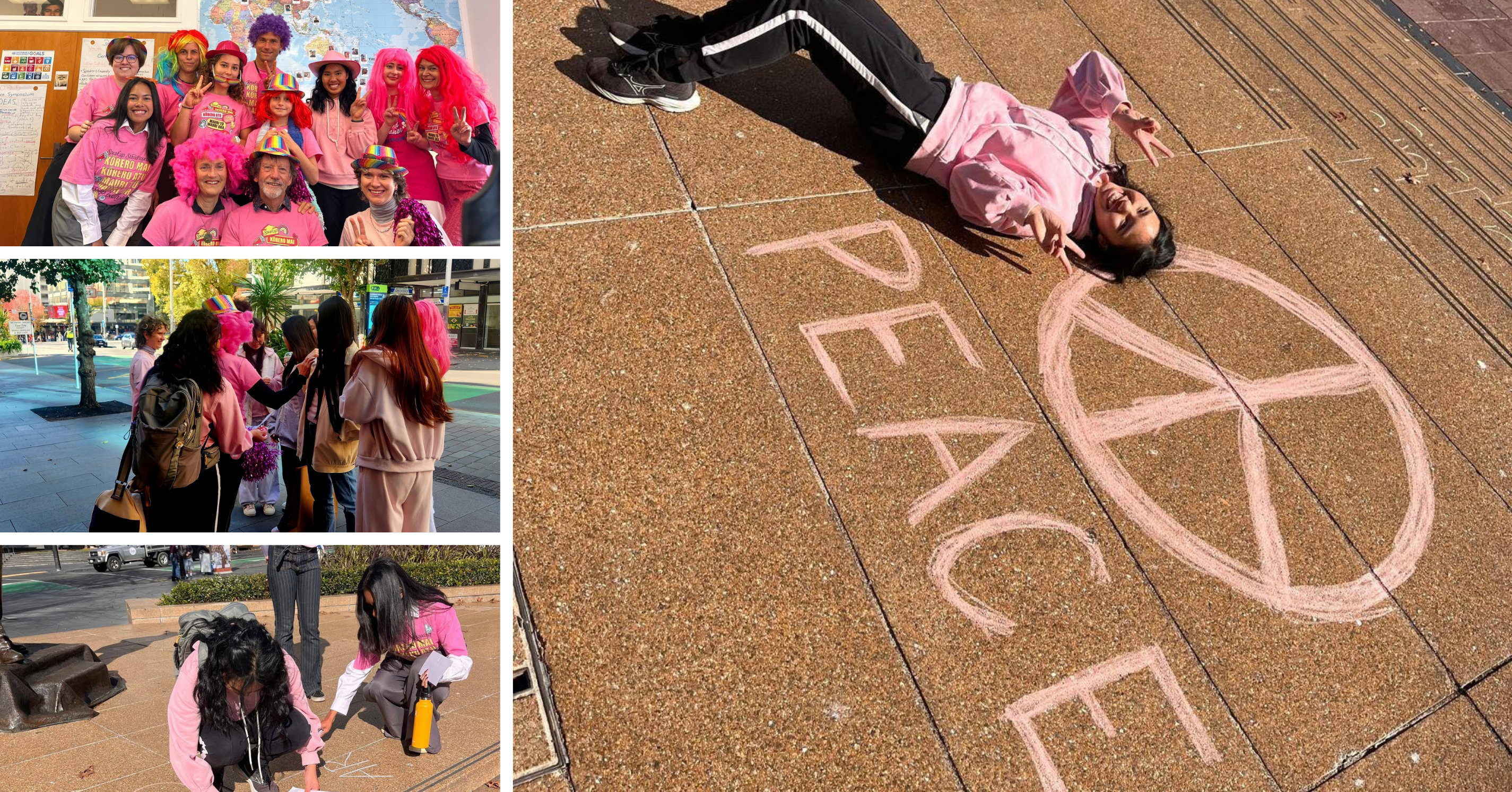
In May each year, Aotearoa New Zealand celebrates Pink Shirt Day – a campaign that promotes inclusion, highlights anti-bullying messages, and fosters the celebration of diversity. Led by The Mental Health Foundation, there is a focus theme and free resources to support kura, workplaces, community groups, and individuals to join the campaign. Supported by Cotton On, it’s always great to see the t-shirt design for each year’s campaign.
The Peace Foundation is proud to get behind The Mental Health Foundation, to highlight the very important mahi they do in Aotearoa. This year our internal team and whānau enjoyed whanaungatanga through kōrero, kai, and creative activities at the office. The celebration continued, as our team then headed out for a Hīkoi Rangimārie along Karangahape Road and Queen Street. We shared the important ‘Kōrero Mai – Speak Up, Kōrero Atu – Stand Together, Mauri Tū Mauri Ora – Stop Bullying’ message with our local community as we went, and then wrote positive peace messages in chalk at Aotea Square. This year, we also invited our Peace Foundation kura/schools to send us photos of their Pink Shirt Day events. Together,let’s build more inclusive and peaceful communities!
2026 Mediators Big Day Out
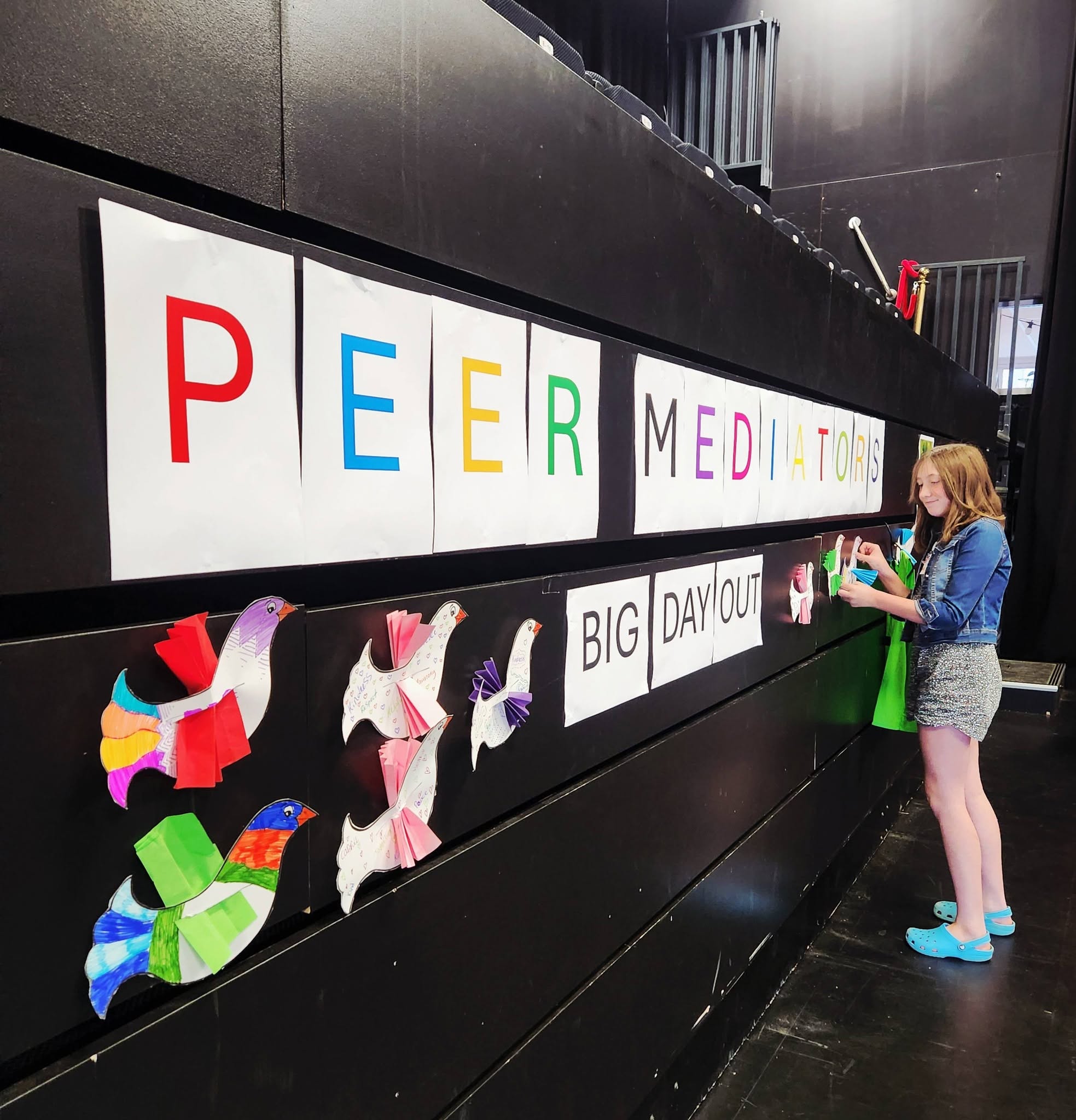
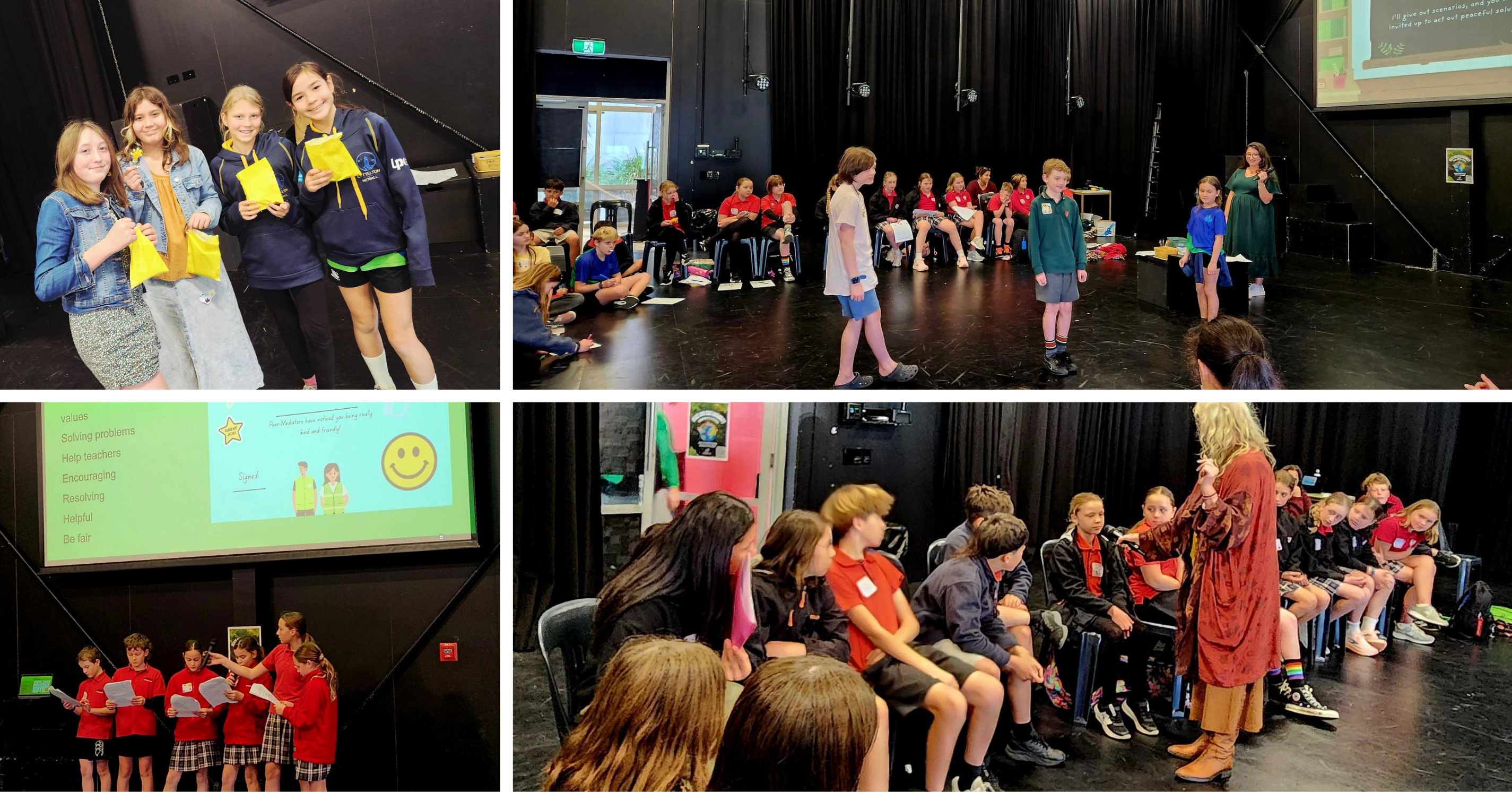
Tracy Scott, our facilitator based in Ōtautahi Christchurch, ran an excellent Mediators’ Big Day Out event on 26 May. Lyttleton Primary School hosted this year’s MBDO, where Cool Schools’ Peer Mediators came together to share their mahi through presentations, learn alongside each other, and participate in fun activities and games that they brought along for everyone to enjoy. Tamariki from Lyttleton Primary School, Te Raekura Redcliffs School, Middleton Grange, Opawa School and Tai Tapu School had a great time celebrating the impact they have in their kura.
Attendees were inspired by this year’s keynote speaker, Peace Foundation Youth Programme Coordinator, Olivia Shimasaki. Olivia ran an awesome presentation about Personal Peace, Interpersonal Peace, and Community Peace.
Dianna Cotter, our new Head of Peace Education, also joined this year’s MBDO. She got everyone moving by teaching her hip-hop rap, ‘Heads, Shoulders, Knees, and Toes’, to reinforce the message that peace begins with us ‘…Inside your head, is a beautiful mind, and in your heart, there is peace to find. What we need, begins with you; if you’re at peace, then I am too.’

1. Wellington Cool Schools Coordinator’s Workshop
Join us for an enriching Cool Schools Coordinator’s Two-day Workshop in Wellington, designed specifically for primary school kaiako. This workshop strengthens conflict-resolution capability and equips you with practical tools to empower your ākonga to manage their own disputes and become positive role models for their peers.
Across the two days, you will explore effective strategies to build independence, empathy, and constructive communication among tamariki — fostering a peaceful and resilient school culture.
By the end of the workshop, participants will be confident in training and supporting a team of school peer mediators and will understand how to establish a successful peer mediation service at their kura.
For more information and registration:
Click here
2. Tāmaki Makaurau Auckland Cool Schools Network Meeting
Join fellow Cool Schools coordinators across Auckland to share successes, challenges, and practical ideas to strengthen peer mediation in your kura.
More information and registration:
Click here
3. Waitaha Canterbury Big Mediators’ Day Out
The Peer Mediators’ Big Day Out is for all schools participating in the Cool Schools or LtPM programme.
This FREE event is an excellent opportunity to recognise and celebrate the efforts of mediators, inspiring both experienced and new members alike.
Get ready for an exciting day filled with fun games, prizes, engaging activities, and insightful presentations!
More information and registration:
Click here

Our Special Pick for Primary School Children:
The Smeds and the Smoos
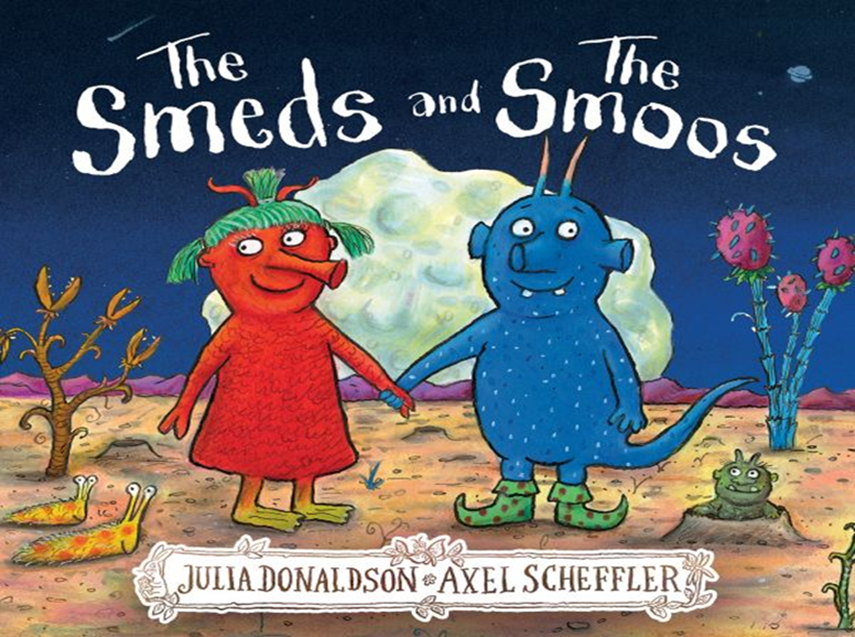
Author: Julia Donaldson
and illustrated by Alex Scheffler
ISBN 978 1407 18889 8
Alison Green Books, 2019
Famed author of Gruffalo, Julia Donaldson tackles the issue of cross-cultural intolerance. On an imaginary planet young Janet Smed befriends young Bill Snoo. Their friendship blossoms but so too does their grandparents’ disapproval. Janet is sternly told to never play with the blue Snoos, because ‘they sleep in holes, they wear strange shoes, they jump about like kangaroos.’
Likewise Bill is admonished, his grandparent telling him that red Smeds ‘have strange hair upon their heads, they sleep in funny things called beds.’
Janet and Bill resolve to run away, flying off in Grandfather Smed’s rocket. The Smed and Smoo families pursue the young lovers. However, with only one rocket left, they are forced ‘suspicious and scowling’ to go together. Thrown into close proximity and facing shared challenges, they begin to understand and help each other.
The book concludes with a delightful twist. Unsuccessful in their mission to find Janet and Bill, the blue Smoos and red Smeds return to their planet. On touch down, they discover not only a very happy Janet and Bill but a beautiful baby ‘purple from head to toe’. A quick google with take teachers to some useful teaching ideas linked to this book.
Our Top Pick for Secondary Students and Adult Readers:
The Meeting Place
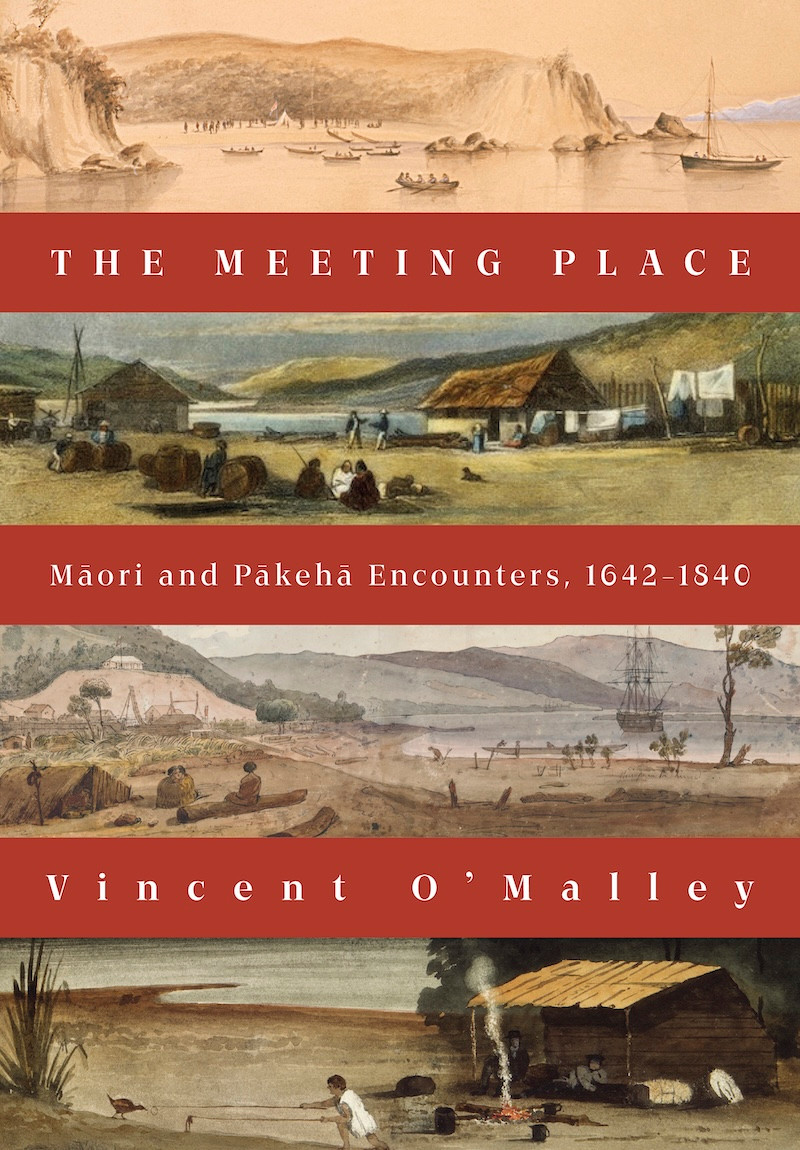
Written by Vincent O’Malley
ISBN: 9781869405946
Early in February 2026, we again celebrated the signing of Te Tiriti o Waitangi. However, recently there has been increasing political debate about the relevance of this document. Te Tiriti/The Treaty cannot be understood in isolation from the social and political context from which it emerged. Vincent O’Malley’s book, The Meeting Place, is highly regarded as a fair and objective account of early Māori and Pākehā encounters and relationships.
The Meeting Place: Māori and Pākehā Encounters, 1642 – 1840 was first published in 2012 by Auckland University Press. The revised 2025 version, published by Bridget William Books, has more detail about Te Waipounamu (South Island) encounters and early journeys across the globe by Māori. The author, Dr. Vincent O’Malley is a respected Pākehā historian. He has researched and published extensively about early Māori and Pākeha relationships and worked on the Treaty of Waitangi Tribunal.
O’Malley takes historian Richard White’s concept of ‘the middle ground’. He describes this as an early stage in the colonisation process, where survival, need and expediency force the new arrivals (in this instance Pākehā) and the native population (Māori) to negotiate, accommodate, compromise and adapt. White describes this as a place ‘in between cultures’, where neither party is the dominant power. Indeed, in the New Zealand context, early Pākehā arrivals were frequently dependent on Māori for their survival and successful engagement was of necessity.
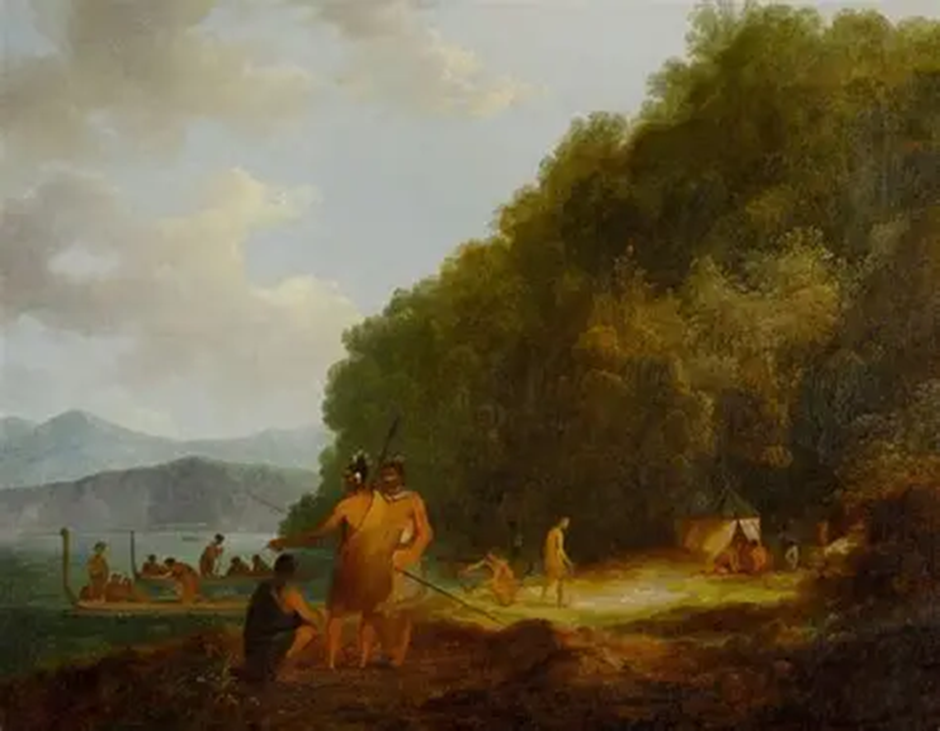
O’Malley does not deny that violent encounters occurred. His book documents some of these, and the factors that gave rise to conflicts. However, his key point is that for the most part, Māori and Pākehā recognised advantages (and challenges) in their early encounters and somehow managed to find some common ground and mutual benefit. He groups areas of engagement into different chapters. These include trading relationships, sexual, religious and political encounters. The book also includes illustrations depicting this period, such as John Webber’s 1777 painting of Cook’s encounter with Māori in Queen Charlotte Cove (see below).
The chapter on trade is fascinating. This details how early Māori quickly recognised the needs of the new arrivals and began to supply goods and services. Goods included timber, flax, fish and agricultural produce. In turn, Māori recognised the value of the newcomers’ goods. Over time, both parties adapted their understandings and practices related to exchange, finding ‘middle ground’. By 1840, some iwi had so successfully taken on and adapted new technologies and practices that they built ships that carried their produce within New Zealand and to Australia.
The final chapter looks at the post 1840 period and the subsequent erosion of the ‘middle ground’. This, O’Malley attributes to the influx of migrants, following the signing of the Treaty of Waitangi. With the shift in population balance to Pākehā advantage, the period of negotiation and a relatively balanced relationship came to an end.
Recent Comments